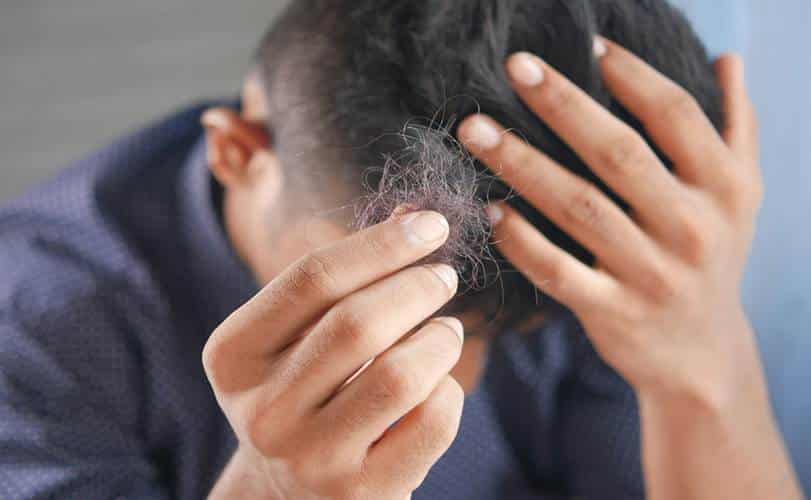
Most men notice it gradually — a slightly higher hairline, a little more hair on the pillow, a thinner patch at the crown. It’s easy to dismiss at first. But male pattern baldness is one of the most common conditions affecting men worldwide, and the earlier you understand what’s actually happening, the better positioned you are to do something meaningful about it.
What Male Pattern Baldness Actually Is
Male pattern baldness, medically known as androgenetic alopecia, is a progressive form of hair loss that follows a predictable path. It typically starts at the temples or the crown and gradually works its way across the scalp. For some men, this process takes decades. For others, it moves quickly in their twenties or thirties.
What makes it distinct from other types of hair loss is that it’s driven by genetics and hormones together — not stress, not diet alone, not poor hygiene. The pattern itself is a clue: if your hair is thinning in a specific, symmetrical way rather than falling out in patches or all over, androgenetic alopecia is likely involved.
The Hormonal Mechanism Behind Hair Loss
The primary driver is a hormone called DHT — dihydrotestosterone. DHT is a byproduct of testosterone. An enzyme in the body called 5-alpha reductase converts testosterone into DHT, which then binds to receptors in hair follicles.
Here’s where the problem begins. In men who are genetically sensitive to DHT, this hormone slowly shrinks the hair follicles over time. Each hair growth cycle becomes shorter. The hair that grows back is finer and weaker. Eventually, the follicle stops producing visible hair altogether.
This is why male pattern baldness isn’t really about losing hair in the traditional sense. The follicle is still there — it’s just been miniaturized to the point where it can no longer support healthy hair growth.
The Role of Genetics
You’ve probably heard that baldness comes from your mother’s side. That’s partially true but oversimplified. The gene most associated with androgenetic alopecia is found on the X chromosome, which men inherit from their mothers. However, multiple genes across different chromosomes contribute to how sensitive your follicles are to DHT.
This means that if your father, maternal grandfather, or older brothers experienced significant hair loss, your own risk is meaningfully higher. But genetics isn’t destiny here — it tells you about vulnerability, not certainty. Two brothers with the same parents can experience very different patterns of hair loss based on how their individual biology responds.
Understanding the causes of male pattern baldness goes beyond just pointing to genetics. Lifestyle factors like chronic stress, nutritional deficiencies, and scalp health can accelerate the process in men who are already predisposed. They don’t cause androgenetic alopecia on their own, but they can make the timeline worse.
When to Take Hair Loss Seriously
Many men wait too long before seeking help, often because they assume nothing can be done or because they’re not sure if what they’re experiencing is “bad enough.” A few signs that it’s worth paying closer attention:
- Your hairline has visibly moved back compared to a year ago
- You’re losing more than 100 hairs a day consistently
- Thinning is concentrated specifically at the crown or temples
- Hair in those areas feels finer or shorter than it used to
The earlier you act, the more options you have. Hair follicles that have been dormant for years are significantly harder to reactivate than follicles that are just beginning to miniaturize.
What Treatment Actually Looks Like
There’s no shortage of products promising to reverse hair loss. Most of them target only one part of the problem. The treatments with the strongest evidence — minoxidil, finasteride, low-level laser therapy — each work through different mechanisms and are often most effective when combined rather than used in isolation.
Some approaches, like causes of male pattern baldness resources offered by Traya, emphasize identifying where in the hair loss journey a person is before recommending a treatment path. That kind of root-cause thinking tends to produce better outcomes than a one-size-fits-all product.
Final Thoughts
Male pattern baldness is common, but common doesn’t mean unmanageable. Understanding the hormonal and genetic mechanisms involved helps you move past the noise of marketing claims and ask better questions about what’s actually happening on your scalp. The most important step is simply taking it seriously early — not with panic, but with the same attention you’d give any other health concern that’s easier to address before it progresses.