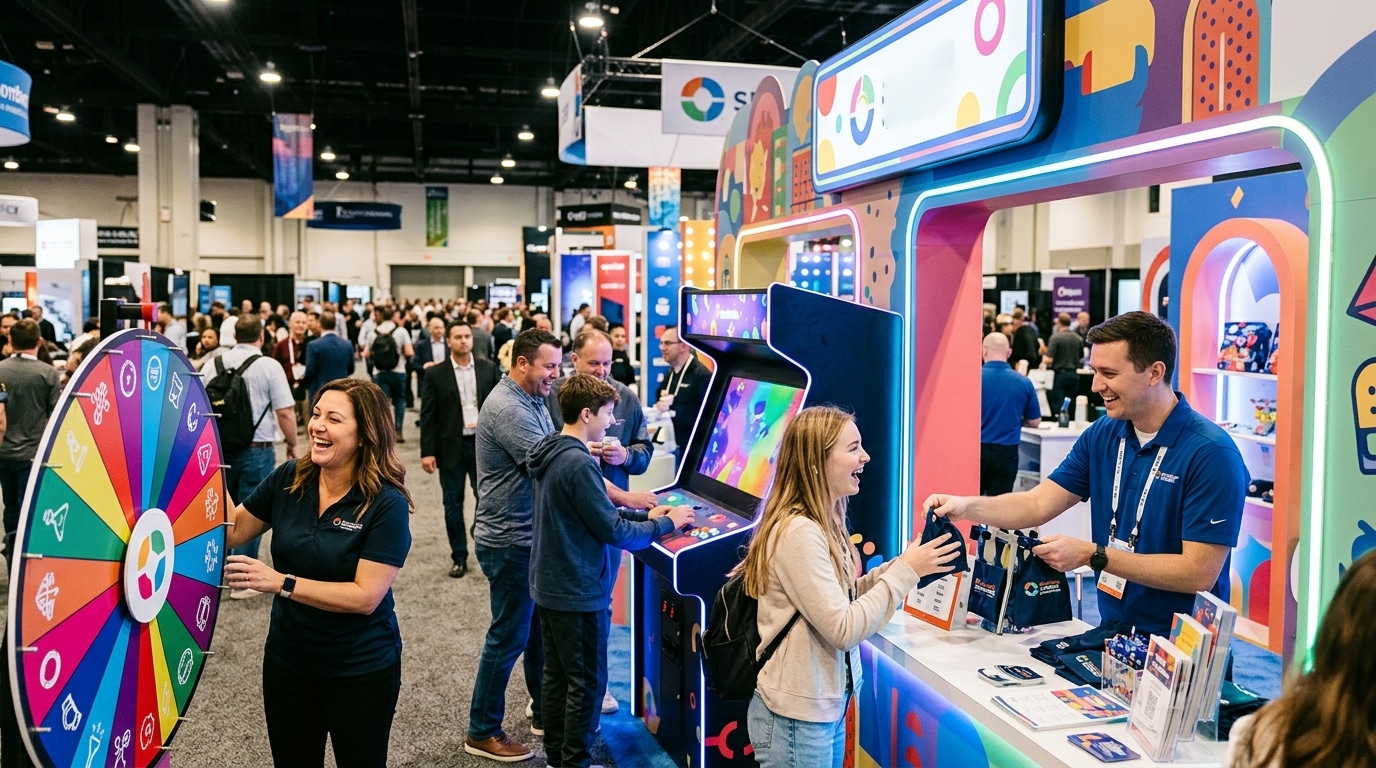
A good trade show booth game idea gives visitors a fast reason to stop, start a conversation, and remember your brand. A game should be easy to understand from the aisle, but relevant enough to attract potential customers instead of only prize hunters. Used well inside a trade show booth, a short activity can turn foot traffic into product conversations, qualified leads, and helpful customer feedback.
The purpose is not to make your display feel like an arcade. It is to create a relaxed first interaction, then give your team an opening to explain how the product or service helps the visitor.
Read Also: Top Best Game Companies
Choose a Game That Supports Your Goal
Decide what the booth needs to achieve before you choose prizes. You may want to collect leads, encourage demonstrations, create social content, or book appointments. The game should make that goal easier. Booth size also matters when choosing an activity. For a compact 10ft trade show booth, consider games that require minimal floor space, such as a prize wheel, tablet quiz, or digital scratch card. These options help attract visitors without overcrowding the display.
Look for an activity that is:
- Easy to explain in a few seconds
- Quick for busy attendees to complete
- Relevant to your product or industry
- Comfortable for staff to manage
- Clear about prizes and rules
Avoid games that need long instructions, complicated technology, or a long queue. A visible activity with a simple reward will usually attract more people.
Read Also: GAME DESIGNER: Duties, Salary, Skills & Requirements
1. Spin-the-Wheel Challenge
A branded prize wheel works because visitors understand it immediately. Use a mixture of useful branded items, samples, discount codes, and a few better prizes. Before spinning, ask one qualifying question about the visitor’s needs or priorities. This creates a natural start to the conversation.
2. Product Knowledge Quiz
Ask three short questions about a common problem, a product benefit, or an industry fact. A quiz can be completed on a tablet or printed card. Keep it educational and light. It helps staff understand what visitors already know without beginning with a sales pitch.
3. Mystery Box Challenge
Place product-related materials or themed objects in a covered box, then ask visitors to identify them by touch. This is especially useful for brands selling fabrics, ingredients, equipment, or other tangible products. Connect the reveal directly to a product benefit or quality difference.
4. Timed Product Build
Invite attendees to complete a small task against the clock, such as matching accessories, assembling a simple item, or arranging a display. The countdown creates energy and attracts nearby visitors. Keep instructions visible and reward participation, not only perfect results.
5. Guess the Price
Display a product package, bundle, or service scenario and ask visitors to estimate the price. This works well when people may assume your solution is expensive. After each guess, explain what is included and why the offering delivers value.
6. Digital Scratch Card
A tablet-based scratch card is fast, compact, and easy to update. Each visitor can reveal a prize, discount, or invitation to a demonstration. If you collect contact details first, make participation optional, explain the prize terms, and use a clear consent checkbox.
7. Industry Myth or Fact
Show a short statement and ask visitors whether it is a myth or fact. Use colored cards, large buttons, or a touchscreen. Choose statements connected to common misconceptions. Reveal the answer quickly, then let staff explain how the brand addresses the related challenge.
8. Plinko Prize Drop
A Plinko-style board adds movement and visual interest. Participants drop a token and receive the prize or offer shown in the final slot. Brand the board with your colors and product categories. For higher-value prizes, ask participants to book a demo or complete a short survey.
9. Photo Challenge
Create a distinctive photo spot using a product, prop, or event-themed backdrop. Give visitors a simple prompt, such as choosing their favorite option or showing how they would use the product. Offer the image through a QR code, and request consent before reposting it.
10. Lead-Scoring Trivia Draw
For B2B events, ask a few questions about role, needs, or purchase timeline, then enter suitable participants into a draw. Present it as a short “find your fit” quiz, not a form. Staff receive better context for follow-up than from a random business-card collection.
Compare Booth Game Formats
The right choice depends on your event goal, audience, and staff capacity. This comparison makes it easier to narrow the options before planning your display.
| Game type | Best for | Staff involvement |
| Spin-the-wheel | Quick traffic and conversations | Medium |
| Product quiz | Education and lead capture | Medium |
| Mystery box | Tactile product discovery | High |
| Timed challenge | Demonstrations and energy | High |
| Scratch card | Digital lead collection | Low |
| Photo challenge | Social visibility | Medium |
Whichever format you choose, connect it to the product within the first minute. The game attracts attention, but the next conversation creates the real value.
Make the Experience Feel On-Brand
Keep instructions visible, prizes relevant, and staff prepared and confident. Test the game before the event.
Frequently Asked Questions
What makes a trade show booth game successful?
A successful game is quick, easy to understand, and connected to a specific outcome such as education, lead collection, demonstrations, or appointment booking. The prize should support the experience rather than become the only reason people participate.
Should every visitor provide contact information?
No. A mandatory form can reduce participation. Let people play freely, then invite them to opt in for a larger prize, tailored information, or a follow-up demonstration.
How expensive should booth-game prizes be?
Match prize value to the required effort and desired audience. Samples, useful branded items, or discounts are often enough. Reserve larger prizes for qualified conversations or scheduled demonstrations.
Can games work at serious B2B trade shows?
Yes. Choose professional formats such as product quizzes, myth-or-fact questions, or lead-scoring trivia. The activity should respect visitors’ time and open a relevant conversation.