Poultry Farming Business
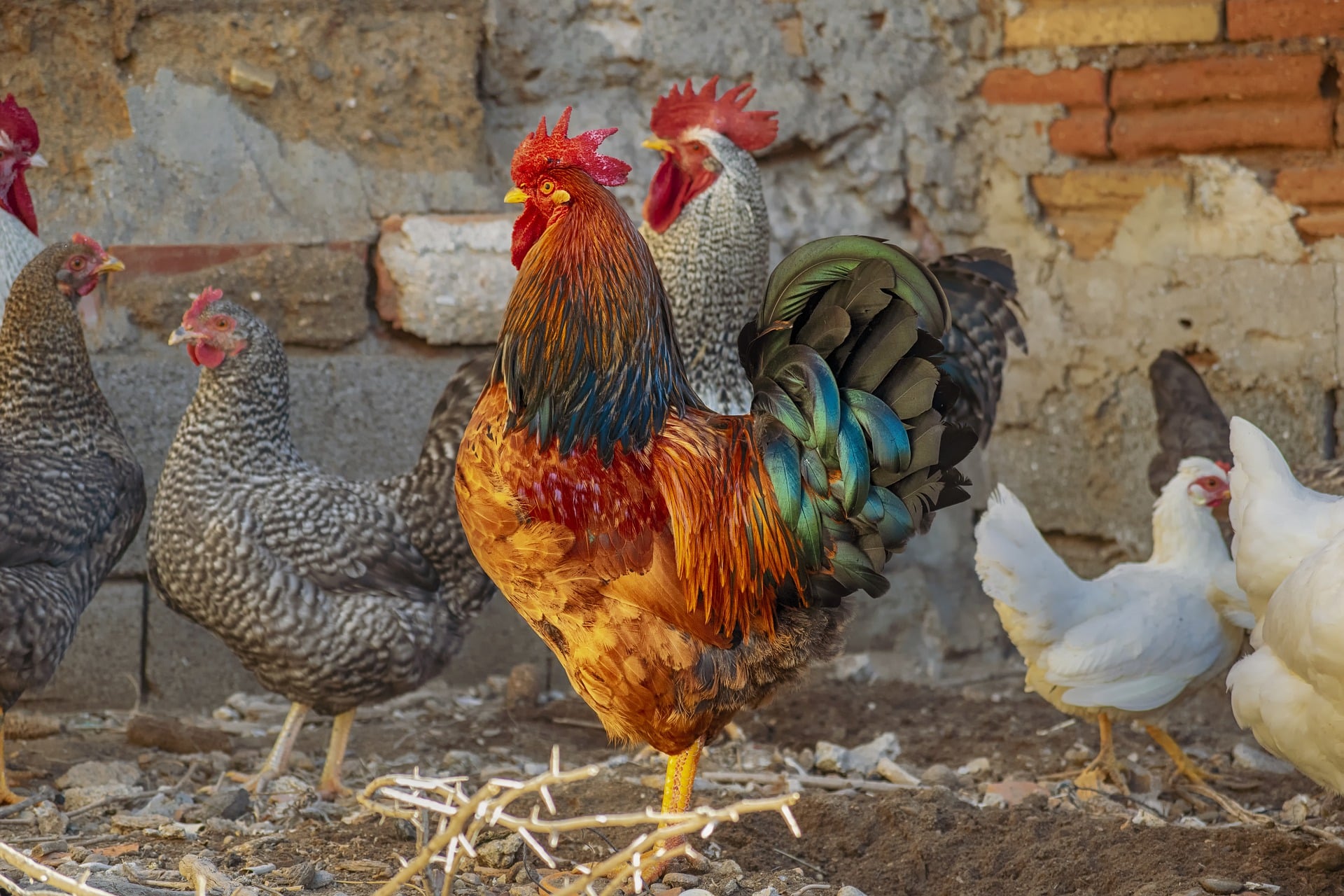
Poultry farming business is a broad industry with many areas to farm. Poultry farming is the rearing of different domestic birds for commercial purposes. This commercial purpose could be meat, eggs, and feathers.
Poultry farming has been in operation for decades, and over the years it has evolved, ushering in easier methods of farming, and it’s one of the fastest-growing, profitable business industries. In fact, as of 2025, the global poultry market is projected to exceed $300 billion, driven by increasing demand for affordable animal protein and advancements in farming technology.
With more emphasis on sustainability, automation, and animal health, poultry farming continues to be a vital and evolving part of global agriculture. I guess this is one of the reasons Agriculture is being encouraged more in Nigeria. Other reasons might include the following the benefits:
Benefits of Poultry Farming Business
- There are many benefits from the poultry farming business, one of which is that you can start with very little capital, because many poultry birds, like chicken, are not expensive to rear.
- Another great benefit of the poultry farming business is that you don’t need a gigantic space to start. Your backyard or clutters cage can work for a start, it is also advisable to start small and watch the business grow over time, and this will help you understand the business.
- You don’t need to invest in high maintenance when it comes to poultry farming, for example, a big structure. It takes just a short space of time, and the poultry business will turn in profit. Birds like chicken take a short period to mature for sale. What’s more important, however, is a clean environment; proper hygiene and regular vaccination will help you minimize diseases. The profits will keep rolling in, and with proper planning, the business can grow exponentially.
- Not many poultry business requires a government license or approval, but getting the required license and permits from the authorities is not so difficult.
- Poultry farm products are in high demand, and egg and broiler chickens are in high demand globally due to their nutritional value.
- You don’t need much marketing, most especially chicken and egg; they sell themselves.
- Poultry farming businesses are always in need of workers, and they have consistently created employment opportunities for people in the labor market.
- Banks are quick to grant loans for the poultry farming business due to its profitability.
Requirements for Poultry Farming
Every poultry farm has its basic requirements that will keep the birds in good condition and also safeguard the poultry farm’s produce. The following requirements are necessary for your poultry farming business:
#1. Space
The number and type of birds you intend to grow will determine the space you will need. If you are going for layers or hens, you will have to calculate the number of birds to determine the cage cubes. Otherwise, you might end up with a cluttered space, which leaves some birds vulnerable, creating room for diseases and even cannibalism.
It is cost-effective when you cage them for commercial laying purposes.
#2. Ventilation
In choosing a space, it is ideal that there should be cross ventilation at the bird’s level or an open roof. The disadvantage of an open roof is rain. Heat has a significant stressful effect on the birds, which can lead to death. A ground cover can help to reduce reflected heat.
#3. Lighting
Hen layers would lay more and be active if their space is well-lighted at all times. A dark space can cause lethargy, and the birds can become unproductive.
#4. Water
Birds need plenty of water to survive, and it’s important to refill their water containers as often as they go dry. Just as water is essential to fish, it is equally vital to birds. For layers, they need constant access to water to function properly and lay eggs effectively.
Lastly, the water should always be clean. Some farmers neglect to change the water regularly, which can lead to health challenges later on.
#5. Building construction
For security against thieves, for a conducive environment, and protection from predators like snakes, rats, and mongooses, every poultry farm needs to be secured. Hence, the need for a proper structural plan that will keep the birds safe from when they are little to when they grow up.
The walls and roofs don’t need to be built from expensive materials—they can be made from bamboo slats, mud, stalks, wooden slats, palm fronds, or sorghum. However, the walls should be cleaned often and replaced when the climate begins to affect them.
#6. Nest
If you should settle for nest laying, one nest should be provided for every 5 birds to avoid competition.
#7. Feeders
No matter the system you choose, birds need constant access to water and food, most especially laying hens. A good feeder should have the right height and depth, be able to withstand regular cleaning, and be strong and stable enough to avoid being knocked over.
Poultry Farming Techniques
Different types of techniques for poultry farming will lead to maximum results
In intensive poultry farming, this technique helps save space, feed, labor, and more. This can translate to an increase in production, but it must be managed under strict supervision by you to ensure the birds remain healthy and the eggs are of good quality. This is important because the intensive system also exposes birds to a higher risk of disease.
- Layer poultry farming: In layer poultry farming techniques, commercial egg layers are kept for about 12 months, sometimes even longer. After their productive period, they are eventually sold for their meat.
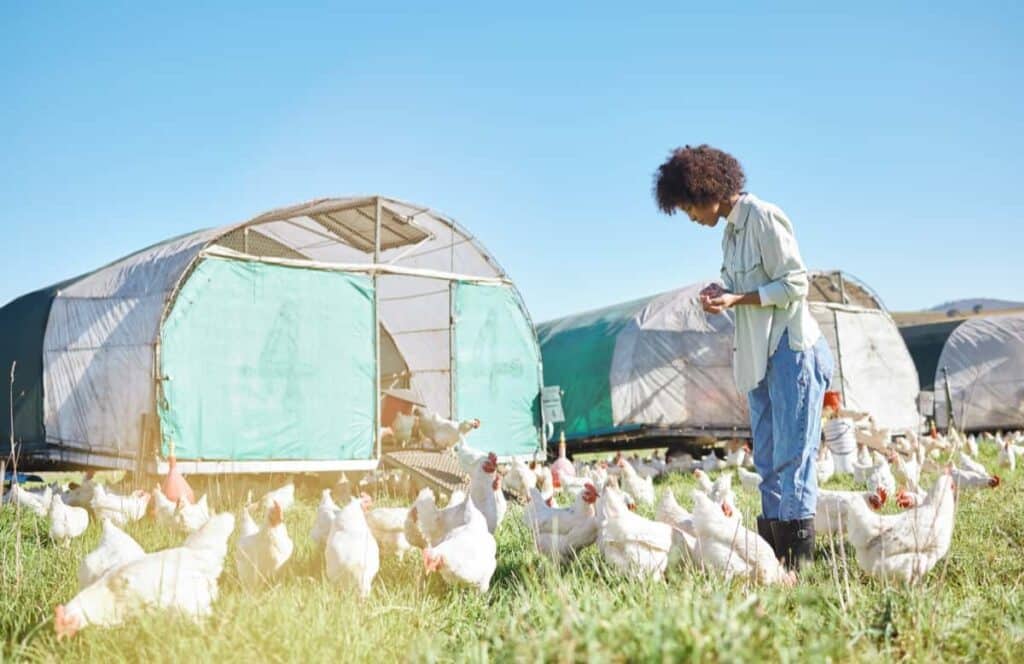
- The free range farming: Here, you allow the birds to roam in a wide space during the day, and at night, you cage them; the essence is for them to do some scratching, foraging, exercise, and pecking.
- The organic techniques: In this system, birds are kept at low stock density and are fed with organic feed, water, and natural yolk colorants. There are some restrictions on their routine and feeding. For example, no more than 1,000 birds can be kept per hectare, and a maximum of 2,000 birds is allowed per house.
- The yarding technique: A situation where cows and hens are reared together is called the yarding technique. In this method, a fence is built, and both the birds and cows are allowed to roam freely in an open space.
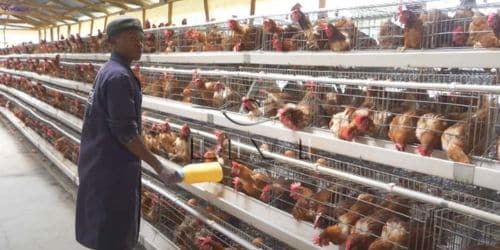
- The Battery System: This is the most common technique in hen poultry farming. Two to three hens are placed in a cage, with the walls made of mesh and the floor sloped. The eggs roll out automatically, while feces fall onto the open floor below. The benefits of this technique are numerous: it’s easy to care for the birds, easy to collect eggs, requires less feed for maximum egg production, minimizes bird stress, has low costs, and allows for more birds to be accommodated in a smaller space.
The battery cage has an updated version known as the furnish cage.
- Broiler poultry farming: There are two methods used for commercial broiler poultry farming. The modern technique allows broilers to be sold for consumption in just 5 to 6 weeks. The indoor technique, on the other hand, involves a well-equipped system with automation for feeding and watering the birds. These structures are well-ventilated and designed with heaters and coolers to maintain optimal conditions. It’s important to note that the house must always be dry and regularly cleaned to ensure the health of the birds.
Challenges Facing Poultry Farming
If you’re thinking about getting into poultry farming, it’s important to know that, while it can be a rewarding business, it also comes with some challenges. Before you jump in, it’s good to understand what you’ll be up against, like the rising costs of feed, the need to keep the birds healthy and their environment clean, and dealing with pests and diseases.
On top of that, in some places, government support for farmers is limited. Here are some of the common challenges you might face:
- Poultry foods are high and birds consume a lot of them to be productive. The market has been saturated with adulterated feeds, which affects the output of the birds.
- Disease and infection can’t be prevented when the environment is dirty, and birds are very sensitive. As a farmer, it is imperative that the environment is constantly clean, as birds react quickly to change.
- The poultry industry is constantly challenged by the unavailability of vaccines, or they become too expensive for farmers to afford to buy.
- The first thing you need to bear in mind is the cost of running the poultry business until you begin to make profits; the cost of purchasing equipment, labor, healthcare, birds, etc, is not cheap.
- In many countries, their government do not support farmers with soft loans or make the system favorable for farmers.
- Pests such as rodents, ants, and predators like snakes can cause serious damage if measures are not put in place to minimize their intrusion.
- The work is tedious, and the payback takes a longer time.
How to Start Poultry Farming In Nigeria
Poultry farming in Nigeria is a highly profitable business, but it comes with its own set of challenges. The demand for white meat, known to be healthier than red meat, is steadily increasing, while eggs, being an affordable and rich source of protein, are always in high demand.
If you’re passionate about livestock, looking for a solid retirement plan, or seeking a new, lucrative business with great profit potential, poultry farming is a path worth considering.
Below, you’ll find a step-by-step guide to starting a poultry farming business. Keep in mind that Nigeria has a vast market for poultry products, making it a promising opportunity for those ready to dive in.
- Choose a Niche. Start by choosing a niche. A lot of people think poultry farming is the rearing of broilers and laying of eggs. There are many areas to choose from, which include boilers for meat production, layers for egg production, hatchery, feed production, etc.
- One very important factor is the type of bird you will raise on your farm. There are many types of birds, for example, turkey, chicken (Layers or Boilers), Guinea fowl, duck, quail, etc.
- Your investment capital is going to be dependent on the size of the poultry and the type of birds you intend to rear. You could invest as much as $600 to $700 in a small poultry you intend to start behind your home.
- Location is key to the profitability and success of a poultry farm business, and it should be sited a little away from residential areas, especially if it’s a commercial poultry farm. A poultry location should not be too far from the reach of customers and suppliers.
- Building Structure will play a huge role in the productivity of the birds. There are three housing systems for poultry farming business: the extensive system, the semi-intensive system, and the intensive system.
- Having the right equipment/appliances will make the poultry farming a lot easier, and there is a long list to put in place. Some of which include the feeders, drinkers, lighting, waste disposal, heat, cooler storage unit, crate, etc.
- It is said that 70% of your expenses go into feeding the bird. Feeding is a crucial part of their survival, you will need lots of research to figure out which method of feeding your finances can sustain. There are two ways to consider: produce your own feeds or buy them already from a manufacturer.
- Labor is a fundamental section of poultry, and it’s advisable to employ workers who have experience in the field. Also, the size of your poultry will determine how many workers you will need to employ.
- Bookkeeping/Accounting is very important. There is a need to keep track of expenses, productivity, performance, etc. This will help you understand the business better and study the profit margin.
- Vaccination is a vital part of the survival of the birds, regular vaccinations will keep the birds in good health and prevent loss.
- Even though poultry products are an essential commodity, they also need to be marketed. Having a marketing plan will sell your produce faster and bring in profit returns, while also promoting your brand effectively.
ALSO READ… POULTRY BUSINESS: Beginners’ Guide to Launch a Lucrative Poultry Business