
The trading and valuation of stocks are important aspects that every individual who intends to invest in the financial market should understand. Stocks are part ownership in a company, and their trading enables investors to enjoy the increases and decreases in price, besides helping in the growth of businesses. The process of stock trading can be tricky, but with a clear insight into how it works, one can guide the beginner to go into the market with a lot of confidence and sound strategies.
The Basics of Stock Trading
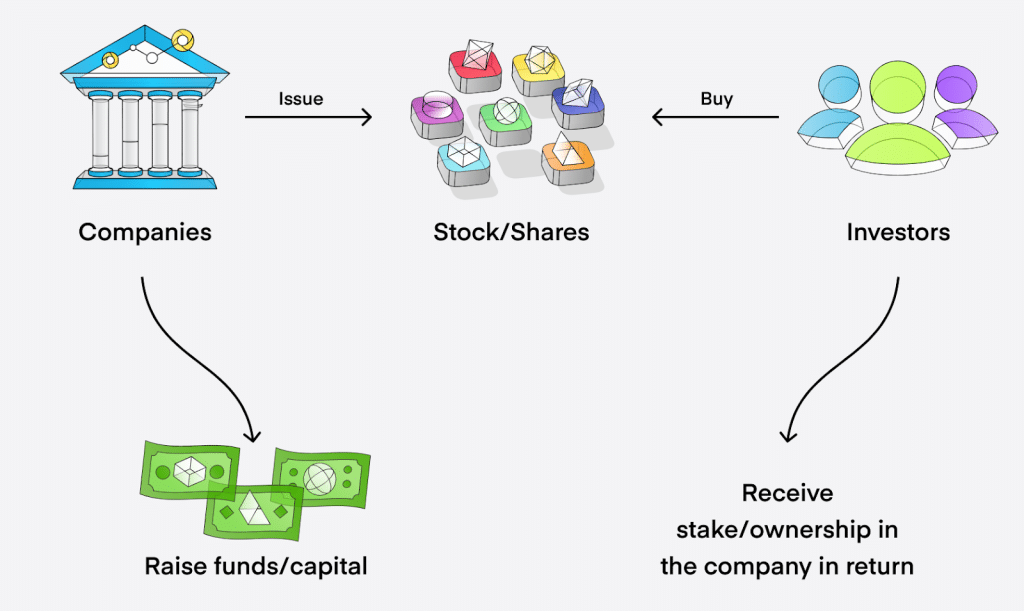
Stock trading means the sale and purchase of shares of publicly listed companies. Every share is a part of the company ownership, which enables the investors’ rights to a share of its profits, in some cases, at the shareholder meetings. The securities are mainly traded in a regulated market such as the New York Stock Exchange (NYSE) or NASDAQ, where buyers and sellers carry out their transactions in a regulated and transparent setting.
Trading is not as difficult as it used to be due to modern technology, where investors across the globe can trade via online brokerage platforms in real time. Although so accessible, to achieve success in trading, it is not enough to issue orders but also to learn the principles of how markets work and what causes prices to fluctuate.
The Selling and Buying of Stocks
The investors have to open a brokerage account in order to trade stocks because stock brokers are intermediaries between buyers and sellers. After establishing an account, one is able to place trades using various kinds of orders. A market order is instantaneous and the market price is executed quickly, whereas a limit order is only executed upon hitting a certain price, and traders have additional control over their trades.
Once an order has been made, buyers and sellers are matched through electronic systems. The price of the transaction is dictated by the balance between the supply and demand. After a trade is made, the seller becomes the seller, and the buyer becomes the buyer, with the ownership of the shares being transferred as well as payment being made. This workflow is highly important in understanding to make informed decisions and prevent typical errors by the investors.
Things That Drive Stock Prices
The supply and demand determine the prices of stocks, yet there are a few factors in the background that dictate the interaction of the forces. The performance of a company would also be a major factor, because revenue increase, profitability, and future would influence the confidence of investors. The economic conditions, interest rates, inflation, and economic growth generally have an influence on the stock valuation.
Another important factor that may lead to short-term volatility is the investor sentiment that can be a result of news, market trends, or speculation. Price manipulation in specific industries, such as changes in regulation or technological progress, is an industry-specific phenomenon. Also, the world events, such as political unrest or trade controversies, may produce unexpected changes in the market. These dynamics enable the investors to be more predictive of the price movement.
Types of Stock Orders
Depending on their strategy and the risk levels, investors have several types of orders to invest in. Market orders provide the opportunity to buy or sell at the existing points in a short period of time, whereas limit orders give a chance to control the prices at which to enter or leave the market. Stop-loss orders allow automatic sale of a stock when its price goes below a set limit, before subjecting the investor to huge losses. Stop-limit orders are more like stop-loss and limit orders, where accurate trade control is achieved.
The correct choice of the order type makes sure that your trades are in line with your strategy and minimizes the risks that may be implied by market changes.
The Role of Brokers
Brokers are also needed to mediate in the stock trading, offer access to exchanges, trade, and provide educational and research resources. Most brokers also offer margin accounts that enable traders to finance their own trading positions. Although leverage has the potential to improve the potential returns, it also enhances risk, and thus, beginners should use leverage with care. Other traders might want platforms that provide some advanced features on leveraged trading, which is also known as brokers with extremely high leverage. It is important to know what leverage entails so that you may not incur greater losses.
Market Makers and Liquidity
Market makers are cruciate the ability to sell and buy stocks efficiently. They ensure that there is liquidity as they are willing to purchase or sell shares at posted prices in the marketplace, hence keeping markets regular. The concept of liquidity itself is the degree to which the stock can be bought and sold without any significant impact of these actions on the price of the stock. Stocks with high liquidity, particularly those of large-capitalization companies, can be easily traded, whereas less liquid stocks can be volatile and have increased spreads. Liquidity knowledge assists traders in investing in stocks that suit them in terms of investment lifestyle and risk exposure.
Analysis Methods
Effective trading is based on effective analysis. Fundamental analysis is the study of the financial health, growth prospects, and competitive position of a business to determine the intrinsic value of a business. Long-term investors usually prefer using this approach. Technical analysis, however, is the study of historical trading and the volume of trading to determine the patterns and trends that can be used by traders to come up with short-term predictions. The two techniques can be combined to give a more holistic picture of the potential of a stock and make more strategic decisions on how to trade the stock.
Risk Management
Risk management is a necessity for all traders. Investment in new fields or asset classes will minimize the risks of losses on one specific stock. Position sizing also makes sure that you have no one trade that has a disproportionate effect on your portfolio. Stop-loss orders preserve capital against unforeseen declines in the market, whereas constant monitoring enables traders to cope with varying circumstances. Investing would be safer by focusing on risk management, and the investors will be able to sustain over a long period of time.
Beginners Trading Strategies
Novices may choose diverse approaches that are based on their objectives. The buy-and-hold strategies aim to grow in the long run by investing in solid, steady companies. Swing trading tries to capitalize on price changes in the short-term, whereas day trading tries to take advantage of fluctuations by making several trades in a single day. Value investing includes the focus on undervalued stocks that have strong fundamentals, and growth investing focuses on companies that have strong expansion potential. Every strategy needs a proper study, discipline, and constant learning.
The Psychology of Trading
The actions of investors are very crucial in market performance. The common are panic selling under the influence of fear, overtrading in the pursuit of profits without sufficient research, and trend following. Learning how to be emotionally disciplined and have a systematic trading plan can assist traders to avoid these errors and stay consistent, as well as enhancing the overall performance over time.
Conclusion
Trading of stocks is an accessible yet easy way to multiply wealth and to engage in the economy. The prices are set in a form of supply and demand, company performance, the economy, and the sentiment in the market, as well as events taking place in the world. Through the knowledge of stock trading, sound use of leverage brokers, including those who are said to have extremely high leverage, proper risk management, and adherence to a structured approach, an investor may navigate the stock market in a confident manner.
Through preparation, discipline, and unceasing learning, beginners will be able to act in the stock market and reach their financial goals in 2026 and later.
Related Articles